Uptown Gunman Anthem — The Complete Story
An original fictional story inspired by the musical concept and artwork.
Chapter 1 — Uptown After Dark
The Bronx never really went quiet. Even after midnight, Gun Hill Road carried the sound of engines, distant music, and conversations floating from open windows. A train rattled somewhere beyond the rooftops. Down on the sidewalk, a man hurried toward the last bus while two friends argued about which dancehall record deserved another spin.
High above the street, a young man stood beside a rooftop wall, looking across the buildings that had shaped his life. People knew him by a reputation that seemed to travel faster than he did. His name appeared in conversations he had never joined, attached to stories he had never told.
His phone vibrated again. He looked at the screen but did not answer. Behind him, music played from a small speaker. The bass was heavy, almost defiant, yet something about the night felt different.
For once, he was not thinking about who might challenge him tomorrow. He was thinking about what would remain when the music stopped.
Chapter 2 — The Weight of a Reputation
A reputation could make a person famous on one block and unwelcome on the next. He had learned that lesson young. Every argument became a test. Every silence was interpreted as weakness. Before long, he had begun living according to other people's expectations.
An older neighbor had once stopped him outside a barbershop. “You know what the trouble is with a reputation?” the man asked. “Everybody thinks they own a piece of it.”
He laughed at the time. Now the words returned with unexpected force.
Below the rooftop, a couple walked home carrying groceries. Nobody watching them would have guessed what they had survived or what they hoped to accomplish. He wondered how many people had judged his entire life from a single moment, and how often he had done the same to others.
Chapter 3 — Pressure From Every Direction
The next message arrived with a photograph and a warning. Something had happened several streets away. Nobody could explain exactly what, but everyone seemed certain that he needed to respond.
“You see that?” one of his companions asked, holding out another phone.
He nodded. The story on the second screen contradicted the first. A third message made the situation sound worse.
“So what we doing?” someone asked.
He looked toward the street. The question was familiar, but the urgency behind it felt manufactured. A dozen people were reacting to a story none of them had verified. Each message increased the pressure, and every minute seemed to invite another opinion.
“First,” he said, “we find out what actually happened.”
Nobody cheered. That was how he knew the answer had disappointed the crowd.
Chapter 4 — The View From Above
He moved toward the edge of the rooftop. From there, the neighborhood looked like a thousand separate lives stitched together by streets and light. Apartment windows glowed above shops preparing to close. A delivery cyclist turned a corner and disappeared beneath the trees.
Far away, an aircraft crossed the sky. Against the clouds, its silhouette looked almost unreal. The dramatic world of the anthem was filled with images of surveillance, conflict, and military power, but the real neighborhood below him was full of people who wanted ordinary things: work, safety, music, family, and another chance tomorrow.
He thought about the difference between looking powerful and being responsible.
The view did not erase his problems. It simply made them smaller than the community around him.
Chapter 5 — Power and Its Consequences
He remembered the first time somebody had handed him a microphone. The equipment was old, the room was crowded, and the speakers distorted whenever the bass rose too high. None of that mattered. For a few minutes, the people listening had forgotten their troubles.
That memory stayed with him longer than any argument he had won.
He had spent years believing that influence meant making people listen. But the musicians who helped him had done something greater: they had made space for him to speak.
A friend approached the rooftop wall. “You gone quiet tonight.”
“Just thinking.”
“About what?”
He watched the headlights moving below. “About how easy it is to destroy something people spent years building.”
His friend said nothing. The music continued between them.
Chapter 6 — A Different Kind of Strength
The calls kept coming. This time he answered one of them and asked questions instead of making threats. The answers were incomplete. Important details were missing. What had seemed like a deliberate challenge now sounded more like confusion multiplied by rumor.
He told his companions there would be no confrontation based on secondhand information.
One shook his head. “People going think you backed down.”
“Let them think,” he replied.
The words surprised even him. A younger version of himself would have argued for another twenty minutes. Tonight, he understood that some audiences could never be satisfied. Every performance only encouraged them to demand a bigger one.
He turned the speaker up. The rhythm filled the rooftop, bold and unapologetic. He could still carry himself with confidence without allowing strangers to decide his actions.
Chapter 7 — The Bronx Remembers
By morning, the streets had changed character. Delivery trucks occupied the loading zones. Shopkeepers raised metal gates. Someone swept the pavement outside a restaurant while music played from a nearby car.
He walked past the barbershop where the older neighbor had spoken to him. The shutters were still down, but he could almost hear the man's voice repeating the lesson about reputation.
The Bronx had always contained more stories than any one person could tell. Its musical history reached far beyond a single neighborhood, influencing artists and listeners across the world. Jamaican dancehall and New York hip-hop had long shared rhythms, energy, and creative exchange.
He stopped near a mural and watched a young performer filming a short music video with a phone. Two friends held the light. Another kept time by tapping a hand against the wall.
They reminded him of what mattered before fame, pressure, and expectation complicated everything.
Chapter 8 — The Anthem's Message
That evening, he returned to the rooftop. The skyline had not changed, but his thoughts had. The same buildings stood against the horizon. The same traffic moved below. Somewhere nearby, somebody was playing music loud enough for the whole block to hear.
He understood that one good decision would not solve every problem. Tomorrow might bring another rumor, another argument, or another test of patience. What mattered was whether he would continue allowing those moments to control his life.
The anthem still carried its fierce cinematic identity. Its imagery spoke of pressure, danger, surveillance, and the struggle for control. But beneath the dramatic surface, another story had emerged: the difference between commanding fear and earning respect.
He looked toward Gun Hill Road one last time.
The Bronx was waking up to another night of possibilities. Somewhere below, another young artist was preparing to press record. The future would belong to the people who found a way to keep creating it.
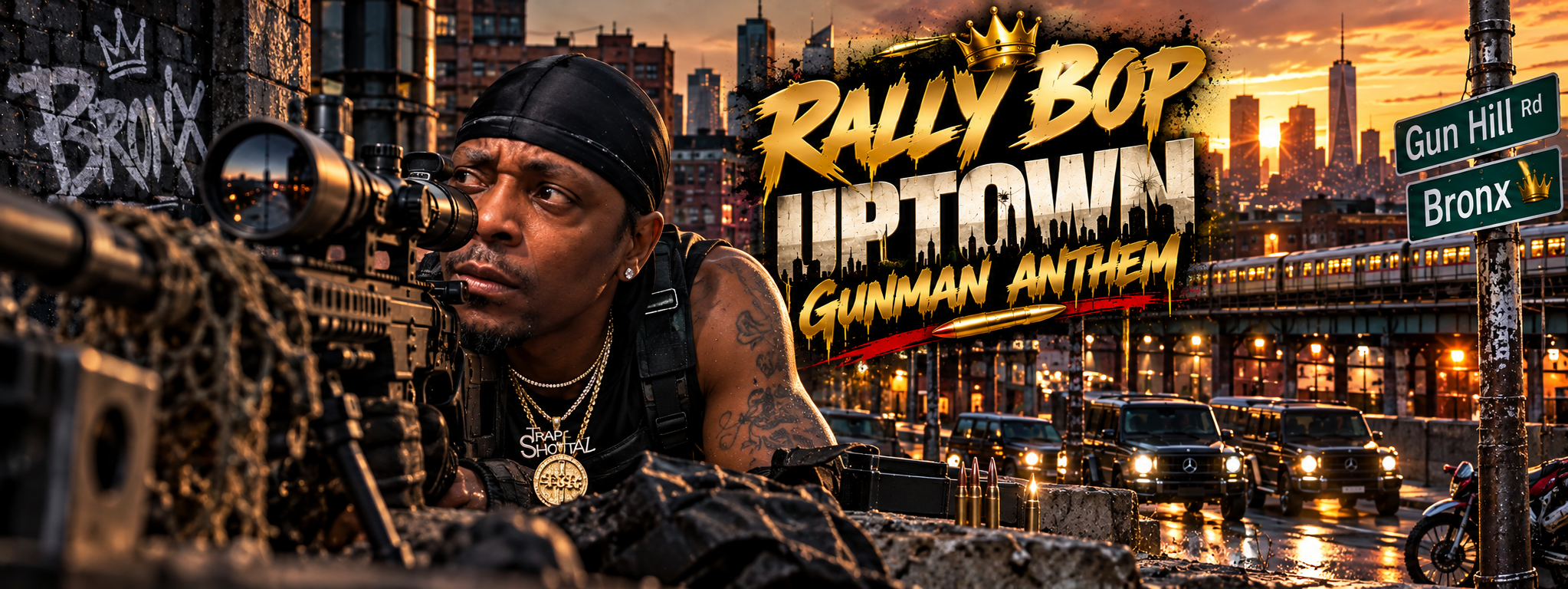
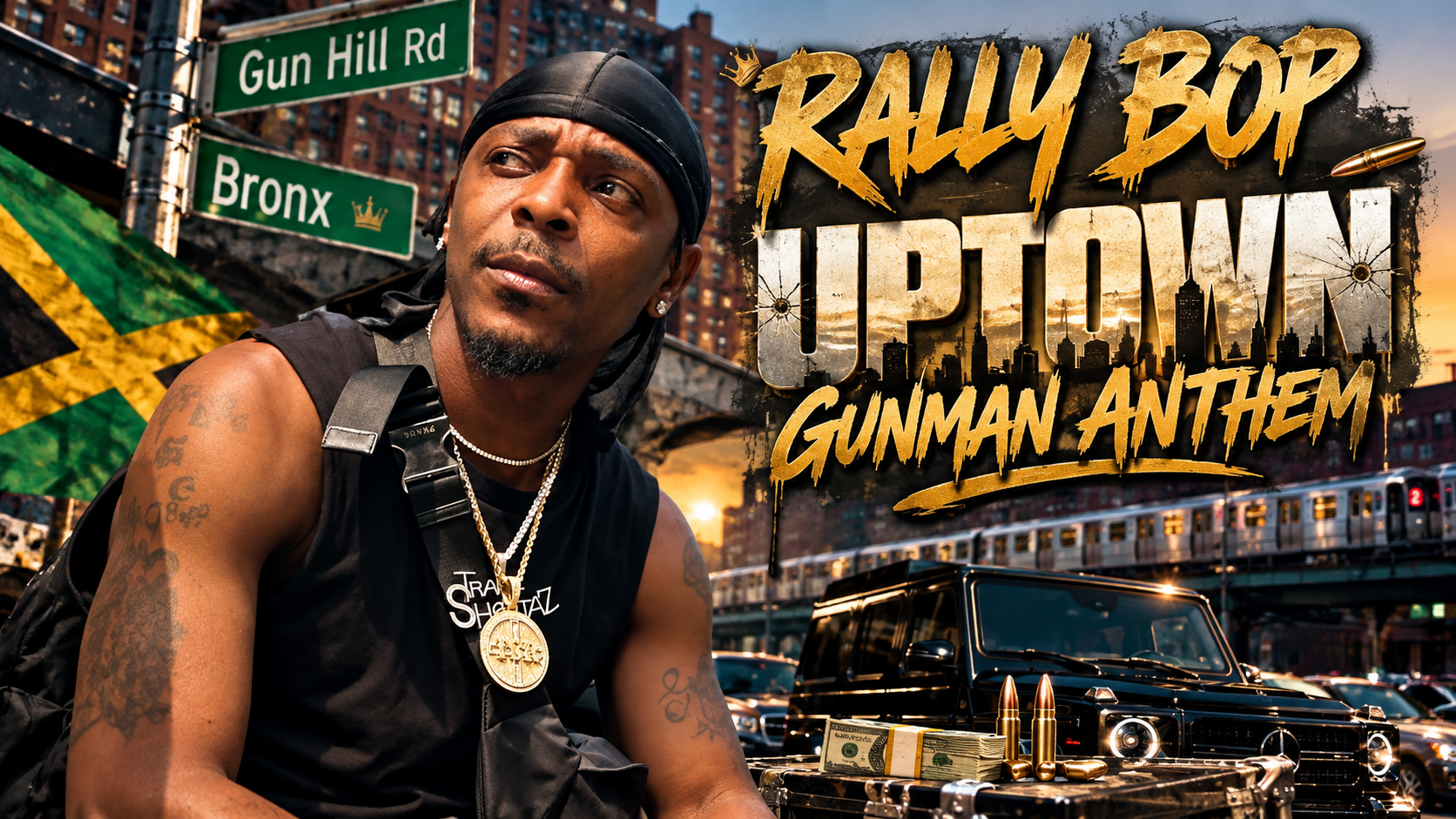
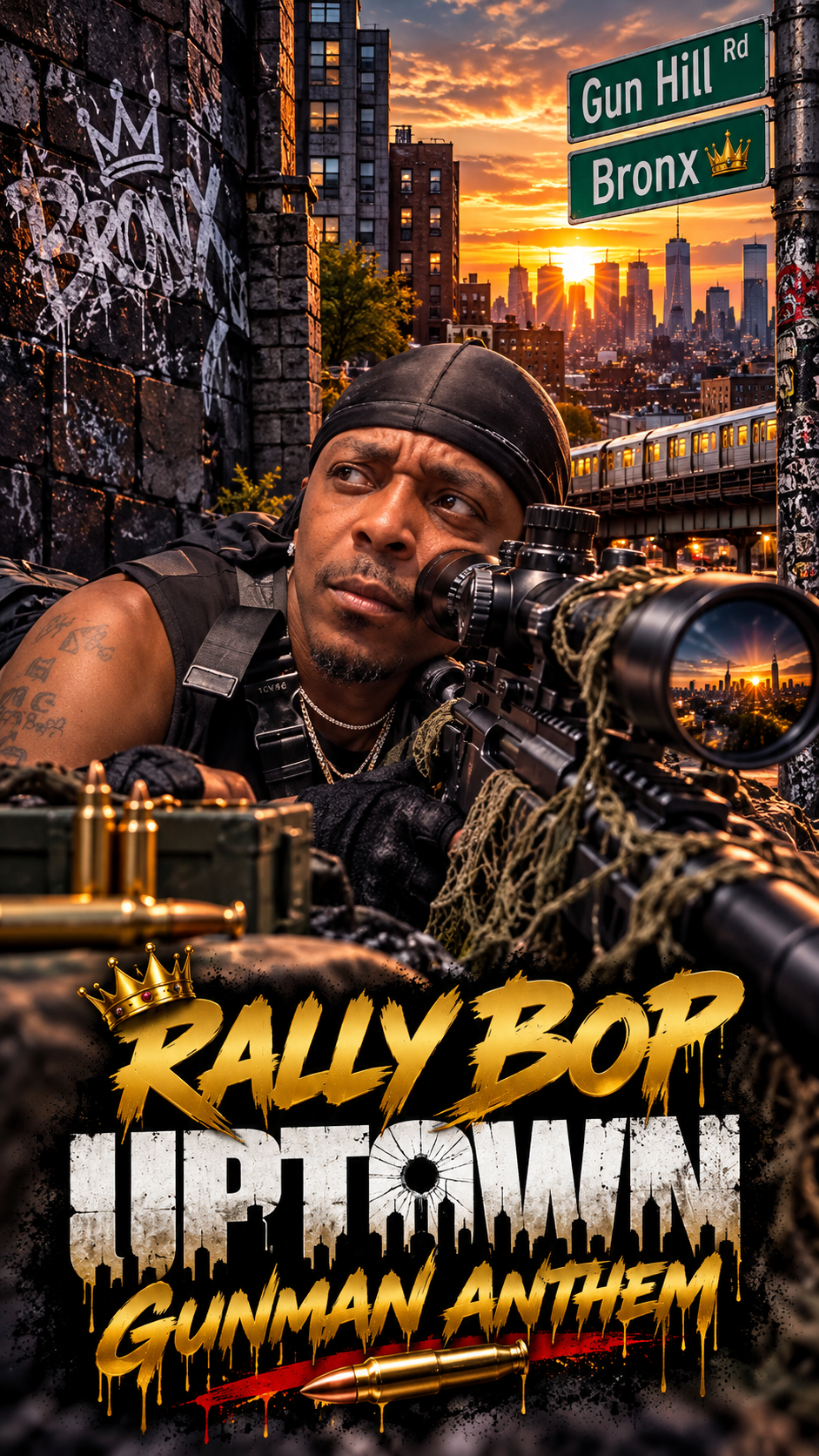
 The Story — Rally Bop
 Everyday
 Knock It Off
 Dem Swear
 Uptown Gunman Anthem
 Before She Get Dry
 Beat It
 Rally Bop — Rally Bop Live
 Poster
 Paper Soldier
 She Wha Rude Bwoy
 Nah Beg Dem Nothing
 Gal Wha Fuck
 Rally Bop — Official Artist Biography
 Rally Bop Homepage
 Rally Bop Hub