
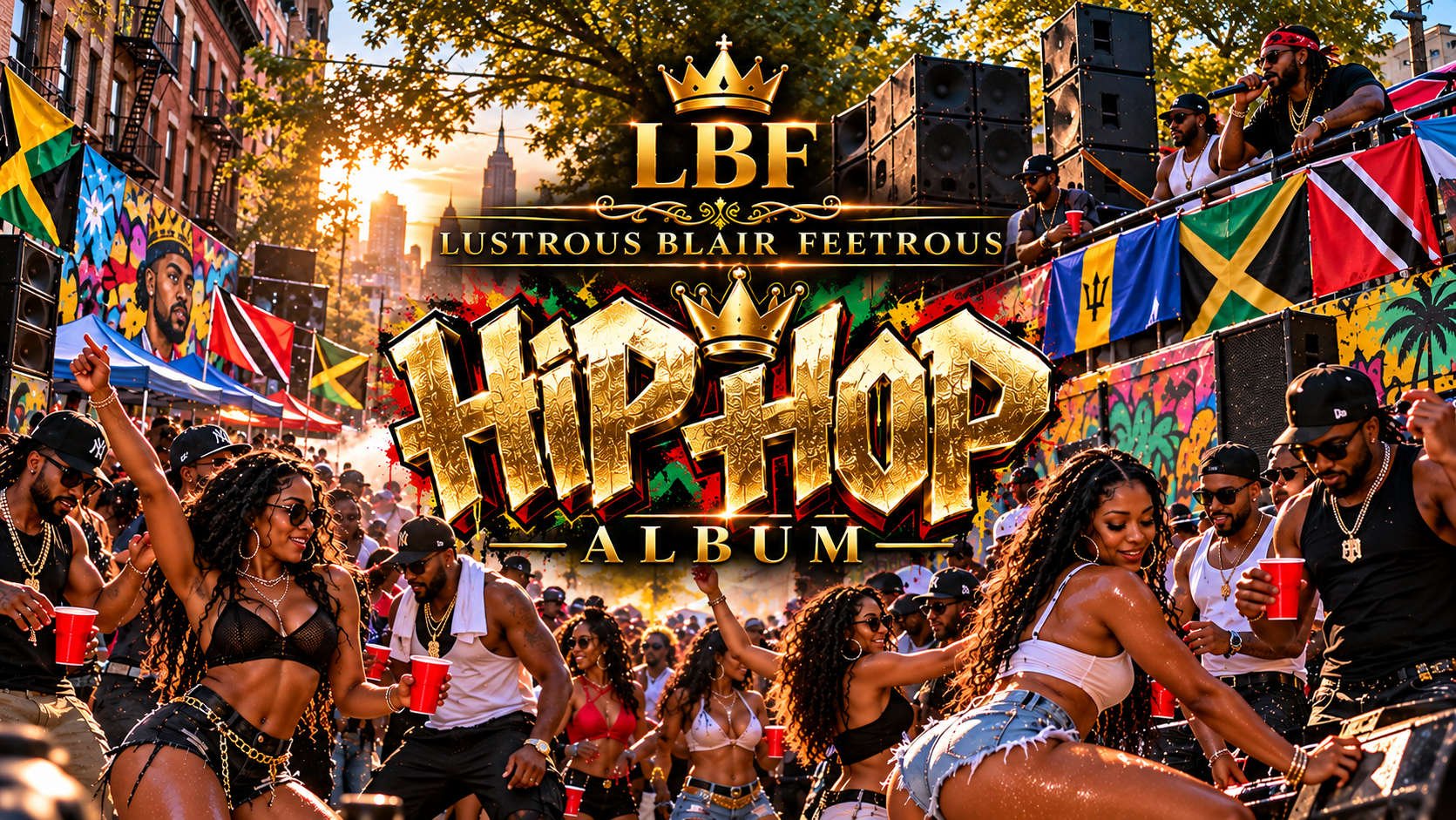
LBF MUSIC COLLECTION
Hip-Hop
Rhythm, storytelling, culture, and powerful lyrical expression.
36 tracks
Now Playing
Album Playlist
Hip-Hop — More Than a Beat
The Beat Before the Spotlight
Before Hip-Hop became a global cultural force, it gave communities ways to be heard. DJs, MCs, dancers, and visual artists created something powerful through imagination, cooperation, and experimentation.
Hip-Hop emerged in the Bronx during the 1970s. Its development showed how young people could transform available resources into original cultural expression.
The first lesson is that opportunity can begin with creativity. A neighborhood gathering, a rhythm, and an idea can become the foundation of something much larger.
The Power of a Voice
At the heart of Hip-Hop is storytelling. A verse can describe a childhood, a community, a challenge, or a dream. Words become a bridge between the person speaking and the person listening.
Good storytelling requires observation. An artist must decide which details matter and how to communicate them clearly.
A microphone gives someone the chance to be heard, but meaningful expression requires thought, honesty, and respect for the listener.
The Discipline Behind the Music
Memorable music requires more than inspiration. Writers revise lyrics, producers refine arrangements, performers practice delivery, and engineers improve the sound.
Technology can assist with composition, production, and distribution, but creative judgment remains essential. The artist must decide what belongs in the finished work.
Discipline is the bridge between an idea and a completed recording. The same principle applies to education, entrepreneurship, and community leadership.
Influence and Responsibility
Hip-Hop contains many forms of expression, including celebration, social commentary, humor, personal reflection, and entertainment. No single recording represents the entire culture.
Artists can describe difficult realities without asking listeners to imitate them. Listeners can also distinguish storytelling from instructions or endorsement.
Influence becomes more meaningful when people understand the consequences of their choices and consider the communities around them.
Ownership and Independence
A song may attract attention, but a sustainable creative career requires knowledge of ownership, contracts, credits, licensing, and distribution.
Independent platforms allow creators to organize catalogs and connect directly with listeners. Independence also requires reliable records, quality control, and respect for rights.
Building something lasting means thinking beyond the next release. A well-managed catalog can become a foundation for future creative and educational opportunities.
A Legacy for the Next Generation
Hip-Hop demonstrates that creativity can travel far beyond the place where it begins. Its history contains innovation, collaboration, competition, mistakes, and achievement.
Young people can participate as writers, producers, dancers, designers, engineers, educators, business owners, and community organizers.
The greatest legacy is not simply being heard today. It is helping someone tomorrow discover their voice, develop their skills, and build something meaningful.
Five Lessons to Carry Forward
1. Your voice has value — Creative expression can help people share experiences and perspectives.
2. Practice builds excellence — Preparation, revision, and discipline improve creative work.
3. Influence carries responsibility — Artists and audiences benefit from thoughtful engagement with music.
4. Knowledge protects creators — Understanding rights and agreements supports informed decisions.
5. Build for the future — Education and shared opportunities can extend a creative legacy.
10 Questions & Answers
1. Where did Hip-Hop emerge?
Hip-Hop developed in the Bronx, New York, during the 1970s.
2. Is Hip-Hop only music?
No. It is a broader culture involving musical, verbal, dance, and visual expression.
3. Why is storytelling important?
It allows artists to communicate experiences, emotions, observations, and ideas.
4. What makes a strong performance?
Preparation, timing, delivery, practice, and communication.
5. Can technology replace creativity?
Technology can assist creators, but human judgment remains important.
6. Must every Hip-Hop song teach a lesson?
No. Hip-Hop includes entertainment, celebration, reflection, and many other forms.
7. Can music discuss difficult realities?
Yes. Describing an experience is not necessarily endorsing it.
8. Why does ownership matter?
Creators benefit from understanding their rights, credits, contracts, and licensing.
9. What supports an independent music catalog?
Organization, quality control, accurate records, permissions, and reliable access.
10. What is the central lesson of this story?
Creativity becomes more powerful when combined with discipline, knowledge, responsibility, and opportunities for others.
Original educational editorial content. No unverified track lyrics or titles are attributed to this album.